
Using Visual Timetables in the Classroom
Quick Answer
Visual timetables help reduce anxiety, support routines, and build independence by giving pupils a clear, structured view of their daily schedule. Using flexible resources like the LDA Magnetic Visual Timetable allows teachers to easily structure the day, introduce individual "now and next" prompts, and guide smooth classroom transitions.
In this article
Making the School Day Feel More Manageable
As a primary school teacher, I'm always looking for practical resources that help children feel confident, settled and ready to learn. In this article, I wanted to share how we use visual timetables in school, why they can make such a positive difference for children, and how the LDA Magnetic Visual Timetable provides a flexible way to support routines, transitions and independence throughout the school day.
Whether you're introducing visual timetables across your classroom or looking for additional support for individual pupils, I hope some of the ideas below provide useful inspiration that you can adapt to suit your own setting.
There are lots of things we do in school that seem small, but can make a huge difference to a child’s day. Visual timetables are one of those things. For some children, seeing what is happening now and what is coming next can help them feel calmer, more settled and more ready to learn.
As a school, we use visual timetables as part of our everyday practice. They help make routines clear, support transitions and give children a better idea of how the day is going to look. Some children, though, need something more personal and immediate. That is where an individual visual timetable can be really useful.
Why visual support matters
For some children, uncertainty can be a real barrier. If they are wondering what is coming next, how long something will last or when a preferred activity is happening, that can take up a lot of their attention. It is hard to focus on learning when part of your brain is busy trying to work out what is going to happen. A clear visual timetable helps take away some of that uncertainty. It gives children something they can return to during the day and makes the sequence of events easier to understand. Mrs Benz, our SENCo, explains that visual timetables can help reduce anxiety because children can see what is happening now and what is coming next. They can also support independence, routines and transitions. I think that is the important bit. It is about helping a child feel more secure in what is happening around them.
A universal approach with individual support
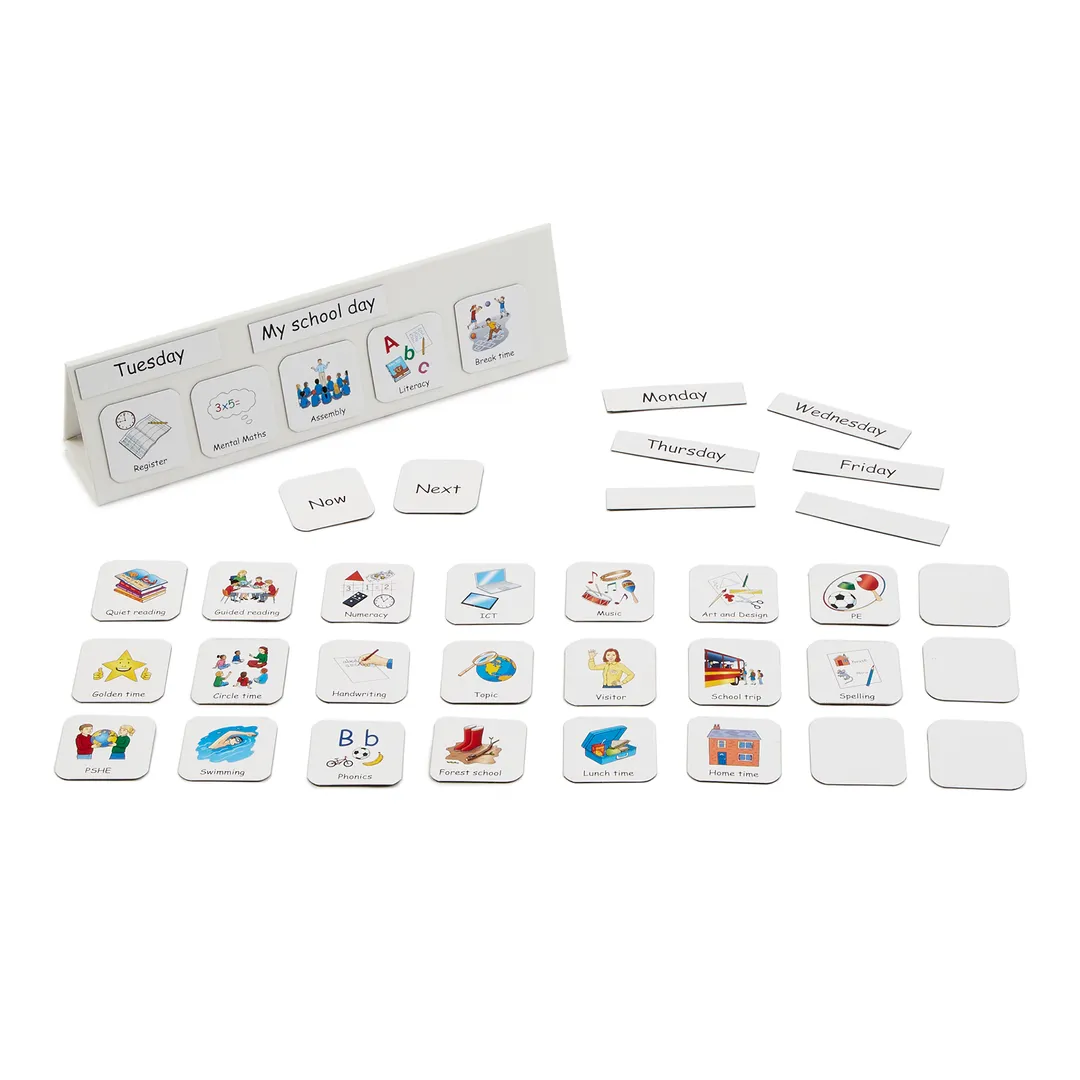
I think visual timetables work best when they are part of normal classroom practice. If every classroom has some kind of visual structure, it does not feel unusual or like something that only belongs to certain children. Some children still benefit from having their own version, especially younger children or pupils who need more support with routines, transitions or changes during the day. What I liked about the LDA Magnetic Visual Timetable was how flexible it was. The ready-made tiles cover common parts of the school day, but the blank tiles are probably the most useful feature. You can write on them and add something specific, whether that is a sensory break, an intervention, assembly or a change to the normal routine.
No two children need exactly the same thing. One child might need to see the whole morning. Another might only need a simple now and next. Someone else might benefit from removing each tile as the activity is completed.
What it looked like in school
The main thing for me was making sure the timetable was something the children actually used, rather than something that sat on a wall. Children could help place the tiles onto the board, move activities from next to now and remove completed parts of the day. Those actions made the timetable active rather than decorative. One of the most useful moments was seeing a child check what was coming next without needing to ask an adult. Instead of relying on repeated verbal reminders, the child had something they could check for themselves. It also gave us a simple way to prepare children for transitions. Before moving from one activity to another, an adult could point to the timetable, show what had finished and make the next part clear. That can make a transition feel less sudden and more manageable.
Simple ways to use it
Now and next
For some children, showing the whole day can feel like too much. A simple now and next structure can be enough. It keeps the focus clear and gives the child a manageable sequence.
Build the morning
You can place the first few activities of the day onto the board together. This means the child is involved in creating the timetable.
Remove what is finished
Taking away a completed tile gives a clear sense of progress. It helps children see that an activity is over and the day is moving on.
Use blank tiles
The blank tiles make it easy to add something personal or unexpected, especially when the usual routine changes.
Final thoughts
For me, the biggest strength of the LDA Magnetic Visual Timetable is that it makes the school day feel more predictable and manageable. As a school, we believe visual timetables are good universal practice. They help all children understand routines and see how the day is structured. The individual version gives another layer of support for children who need something more personal. It is also one of those resources that does not need to be complicated. You can adapt it and use it in the way that works best for the child in front of you.
Sometimes the smallest classroom changes can have the biggest impact. For some children, seeing what is happening now and what is coming next can make school feel calmer, clearer and much easier to manage.
For more information and to browse the product online, visit hope-education.xyz or click the link.
Author
Simon Hunt
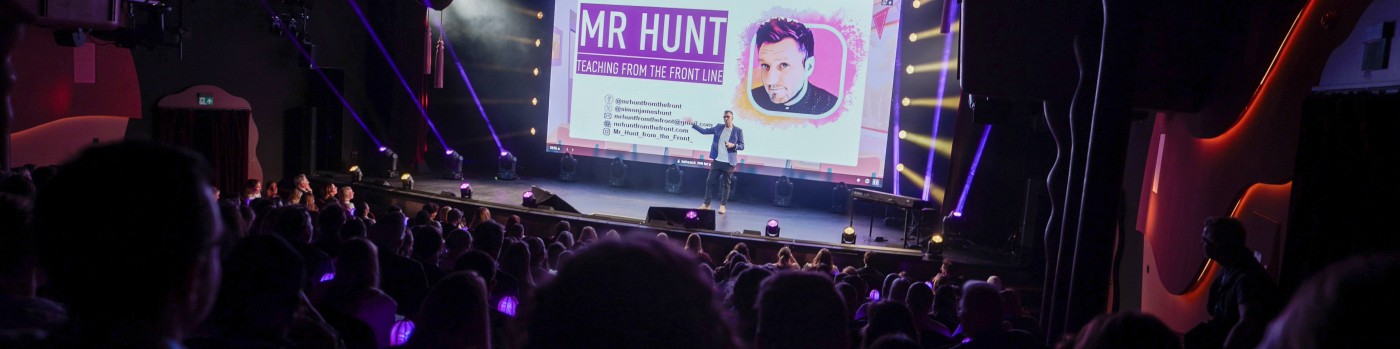
Simon Hunt is a primary school teacher currently teaching in a mixed Year 3/4 class at Tottington Primary School. He is passionate about making learning practical, engaging and memorable for children, especially through creativity, computing and meaningful uses of technology in the classroom. Simon is the Manchester Evening News Inspirational Teacher of the Year award winner and has spoken at educational conferences across Europe. He also works with BBC 500 Words as a consultant, is a children’s author, and visits schools to talk about writing, storytelling and reading for pleasure, as well as sharing CPD and practical ideas with staff. Alongside his work in schools, Simon shares ideas, classroom practice and reflections online under the name Mr Hunt from the Front. At the heart of everything he does is a real passion for helping as many teachers and children as possible through ideas that are practical, inspiring and rooted in real school life.